Hate and Racism: The Sand Creek Massacre/Benghazi

“Allabu akbar” – “Nits make lice.”

I gave an interview on Radio KVOR 740 a.m. on the Richard Randle Show in Colorado Springs on Friday, November 29, 2013,
the 149th anniversary of the Sand Creek Massacre. Mr. Randle’s questions were poignant and objective. He asked me to
explain what caused the Sand Creek Massacre as well as giving my thoughts about why the troops committed such heinous
acts during the massacre.

I responded by juxtaposing the attack on U. S. Consulate in Benghazi on September 11, 2012 to the Sand Creek Massacre.
I said that both attacks were based on racism and hate. Al-Qadea’s intense hate for Americans centers around their
religious beliefs fueled by American’s gluttony. Colonel John M. Chivington, Methodist minister’s hate for America’s indigenous people fueled his drive at Sand Creek to create genocide. Before the attack, amongst other things that he said was, “Nits make lice”, in his reference to Indian children.

The Islamist militant group, Ansar al-Sharia, claimed responsibility for the attack on the consulate. During the attack, as
they shot AK-47’s in the air and American Ambassador Chris Stevens, Sean Smith and those trying to rescue them smothered in the smoke by the burning of the consulate, militants screamed, “Allabu akbar” (“God is Great”). Islamist fundamentalists are hell-bent
on destroying America so that their misguided idea of what their Prophet Mohammed wanted, to drive out all “infidels”
and to replace them with the fundamentalist version of the “Quran,” will come true, which is yet, another form of genocide.

The essence of hate and racism dwells in ignorance. Ignorance fuels fear. Fear ignites expressions of hate and racism.

Even with all of the advancements human beings have made in the world with respect to racism and hate, racism and hate continue to burn so fiercely that unless we, as a people, converge on it, different forms of genocide will continue to ravage the human race, and as a race, we will disintegrate and be no more.

Many are unaware of hate and racism. Their feelings and beliefs regarding race, religion and culture can blind the most insightful
with respect to hate and racism. We see daily in the media headlines, actions in the U. S. Congress and in influential political and business circles how hate simmers and racism boils with respect to President Barack Obama. Many of the economic and political problems America has experienced during President Obama’s tenure as president exist
because of blindness to hate and racism.

It is up to us, individually, to level the barriers of hate and racism that exist in our lives, so that each one of us can expand and grow as human beings. This kind of attitude will elevate our individual lives as well as everyone else’s life, and in turn, help our children and grandchildren have a better and safer world in which to live. And we can do this by learning and growing individually through educating ourselves about all cultures, races and religions, to make us more fully-informed human beings.

Donald L. Vasicek
Olympus Films+, LLC
The Zen of Writing & Screenwriting
http://www.donvasicek.com
http://www.sandcreekmassacre.net
dvasicek@earthlink.net
303-903-2103

Colorado Territorial Governor John Evans

images-1

Sand Creek Massacre Testimony About the Dead

John Smith testifying before a government committee on March 14, 1865:

“On the day of the attack. He asked me many questions about the chiefs who were there, and if I could recognize them if I saw them. I told him it was possible I might recollect the principal chiefs. They were terribly mutilated, lying there in the water and sand; most of them in the bed of the creek, dead and dying, making many struggles. They were so badly mutilated and covered with sand and water that it was very hard for me to tell one from another. However, I recognized some of them – among them the chief One Eye, who was employed by our government at $125 a month and rations to remain in the village as a spy. There was another called War Bonnet, who was here two years ago with me. There was another by the name of Standing-in-the-Water, and I supposed Black Kettle was among them, but it was not Black Kettle. There was one there of his size and dimensions in every way, but so tremendously mutilated that I was mistaken in him. I went out with Lieutenant Colonel Bowen, to see how many I could recognize.”
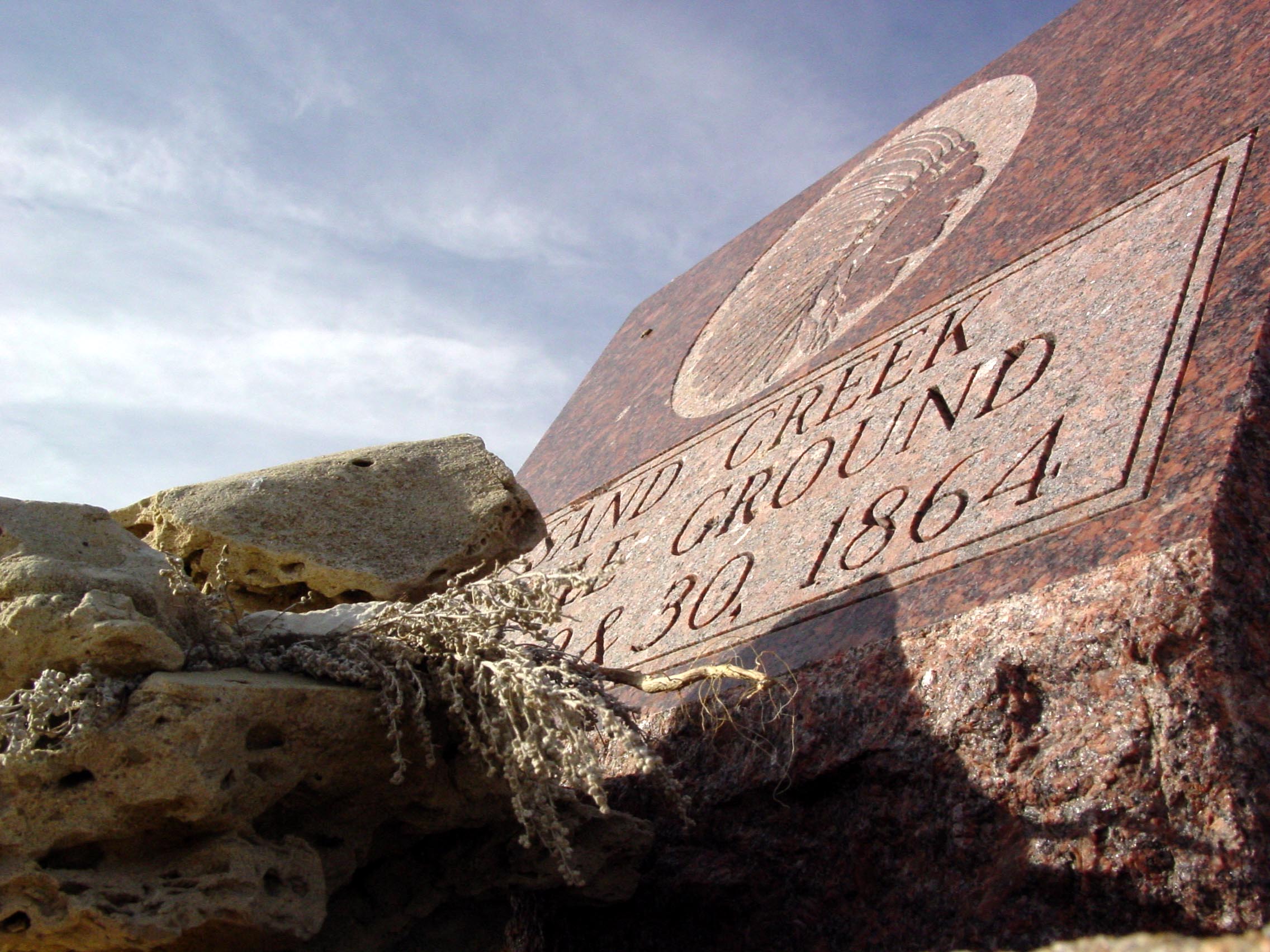
sand-creek-massacre-site-marker
Photo by Navajo Filmmaker Shonie de la Rosa. – Click on Photo to see all of it.

(May 27, 2012 response to “Boulder Daily Camera” article):

During the past several years while reading about the Sand Creek Massacre as written by various writers, journalists, etc., one thing in common continues to surface. No one interviews the Cheyenne people before they write what they write. That is not ojbective journalism. You all need to do that if you want to write the complete truth about this horrific and tragic event in American history.

The research I did while making my award-winning documentary film about the Sand Creek Massacre, which was recently put in the Smithsonian Institute Libraries, I learned from Southern Cheyenne Chief Laird (Whistling Eagle) Cometsevah that there were over 400 Cheyenne children, women, elders and physically- and mentally-challenged people murdered, raped, mutilated and burned during and after that massacre.

Also, Chief Cometsevah told me that the Arapaho were not at Sand Creek. The Arapaho always followed the Cheyenne wherever they went. The Arapaho always camped about eight miles away from the Cheyenne, it was an unwritten law between the tribes. The early morning of the Sand Creek Massacre, the Arapaho were camped by Sand Creek eight miles to the south of Dawson Bend, where, as Chief Cometsevah told me, the massacre took place.

Chief Cometsevah, as well as several other Cheyenne and Arapaho people told me, the only thing they want now is respect. Check it out. Over 147 years have passed since the Sand Creek Massacre, and that respect is still as fleeting as a peregrine falcon racing away through the sky. Respect begins with the self. Respect can be demonstrated by including the Cheyenne people in all media reporting, and it should begin now!

So, you all should think about these pieces of research the next you write about the Sand Creek Massacre.