June 18, 2008 – Centennial, CO – Donald L. Vasicek, award-winning writer/
filmmaker for the Sand Creek Massacre documentary film recently traveled to
Europe. Amongst his stops was Dachau, a Nazi concentration camp about nine
miles or fifteen kilometers northwest of Munich. Vasicek, known for his campaign
to educate others about American native people, nevertheless, was stunned by
what he saw and experienced at Dachau and in Anne Frank’s house in Amsterdam.
Part of his notes are as follows:
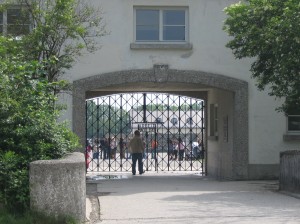
“To escape from Dachau, one had to sprint across an eight-foot wide
strip of grass. The grass was nurtured there for prisoners. It encircled
the interior of the camp. If one stepped on the grass, they were shot. If
one made it past the grass to a v-shaped cement moat that also surrounded
the interior of the camp, they had to scamper down into the moat, up the other
side of it to barbed wire that was spread on up-sloping ground. An, at least
ten-foot high electric fence with barbed wire curled on top of it like large circles
drawn with barbed spikes on it, was the last barrier to escape from a place
where an estimated 50,000 human beings were murdered.
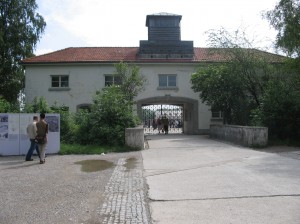
“As I toured the camp and listened to the tour guide’s description of the camp,
what was there, and what is presently there and why, I felt like I had stepped
into the past. All of the books I had read, all of the movies and documentary films
I had seen, all of what I had learned about that horrific time, came to the surface there. I got a
dose of reality. I could feel the terror, the pain, and the sorrow. I constantly
asked myself, how could anyone create such a horrifying place? I was stunned
to realize how real Dachau had been, how much hate had been generated to mask
the reality of breathing human beings.
“When I walked up to the crematorium, I traced the steps of prisoners who could
no longer work or work, like women, children, elders, the sick, prisoners who were gay,
prisoners who were gypsies and other “throwaways”, as Nazis often called them.
“The first room was the room where prisoners had to strip themselves naked. Then, they
walked to the next room, which had a lower ceiling than the rooms in the rest of the building
and no windows. They were told they were going to take showers, but instead, poison
pellets were dropped into the room in two hinged box-like containers in one wall that
were filled with the pellets from outside of the building.”
Think about that. Just think about that.
“The next room was the crematorium. I stood in front of the ovens as the tour guide
explained that towards the end of the war (World War II), the Nazis escalated the job, or
as they called, the final solution. They backlogged at Dachau. The tour guide showed us
how bodies were piled up, both inside and outside of the crematorium waiting to be
burned. Pictures taken at the time were prominent there.
I stepped back from the photos. I realized that anywhere I stepped, I stepped where
Nazis and people condemned to death by ignorance had either once stood, or lay. I
know I am unique, different, because there is no one else who is me. I just don’t like
the idea that killing is a solution to solving problems. Genocide is ignorance based on
fear. And according to some, fear is the second most powerful human emotion next to love.
The tour guide mentioned that the German people, as recent as 1999, had decided to
“come out” with their horrific past. German children are now required to study World War II
Nazism and come to the camps to learn. The tour guide said the reason the German people
had waited so long to “come out” was because of their shame for the
terror and devastation the Nazis had perpetuated on millions of others.”
It is time, now, for the American people to do the same thing. We must come out
of our shame and stop genocide in America. That is the very least we can
do for the native people of America. Our children must learn about native people,
their cultures, their history, and who they are as human beings so that they can relate
to them as human beings.
No one is better than anyone else regardless of achievements, social standing, religion ,
culture, race and/or material wealth. We are one because we are human. We are a collectiveness
consciousness. When we hurt someone, we damage that consciousness. This, in turn, causes
all human beings to lose some of the positive energy this kind of
consciousness brings to each one of us.
If one isn’t convinced, walk in the hidden recesses of a building next to Princes Gracht Canal
in Amsterdam where thirteen year-old Anne Frank hid from the Nazis with her family for three
years until they were betrayed and sent to camps. Walk in the rooms.
I did. Guess what? Anne Frank was a talented girl, a writer, a young person with
dreams and goals. A Jewish girl who loved her family more than anything else
in her world. A human being.
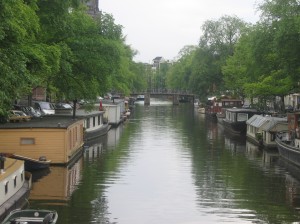
Feel her there. Feel the terror. Anne Frank, at age sixteen, died from typhoid in a concentration
camp because of ignorance fueled by fear. Genocide in its finest form.
Then, there is the Sand Creek Massacre. I’ve been at the site several times. Sat in the grass
by Sand Creek, camera in hand, alone, recording sounds, the sun warm on my back. I felt like
others were there. You know, invisible, but there. Perhaps apparitions, if I looked hard enough.
On November 29, 1964, there were over five-hundred Cheyenne lodges there, perhaps a thousand
or so Cheyenne people, seven-hundred soldiers, their horses, their equipment, their canons,
their guns, their sabers, and Indian dogs and horses. Their ignorance. Their fear. Their hate.
And there was murder there. Rape. Mutilations. Carnage.
There is a prominent person who has done work at the Sand Creek Massacre Site. I asked
her if she ever “felt” anything while she was there doing her work. She said, “No, not really, but I’ll
never go out to the site at night.” I asked her why. She said, “I don’t know why, I just won’t go.”
You might want to check it out, see how it makes you feel. Perhaps it can remove you,
even for a moment, from your reality and plunge you in the depths of losing sight of who
human beings, all human beings really are, human beings, just like you and me.
####
Contact:
Donald L. Vasicek
Olympus Films+, LLC
dvasicek@earthlink.net
303-903-2103