Blog

  • What Caused the Sand Creek Massacre?

    by
    Donald L. Vasicek

    A General Chronology:

    1. The breakout of the Indian Plains War of 1864 fueled by tribal skirmishes in Western Nebraska, which some believed, threatened the well being of Caucasians on the Plains.

    2. In June of 1864 the Hungate family was brutally murdered by 4 Northern Arapaho Indians just miles outside of Denver City. Fear about being attacked in Denver City reached monumental proportions.

    3. Denver City was flooded in June of 1864. This caused Caucasian property loss, which exposed them to the elements, which included Indians.

    4. In the summer of 1864, the Colorado Territory experienced a severe drought. This caused the Cheyenne (according to Southern Cheyenne Chief Laird [Whistling Eagle]Cometsevah, the Arapaho followed the Cheyenne, always camped about 8 miles away from them, and were camped 8 miles away when the massacre occurred), who followed the buffalo, to go to where the buffalo roamed, to the Arkansas River Valley where there was water.

    4. Because of the Hungate murders and rumors circulating throughout the Colorado Territory that the Cheyenne and Sioux, some 3,000 strong, were gathering at Smoky Hill to plan an attack to wipe out Denver City, Territorial Governor John Evans issued a proclamation that all Indians report to the nearest fort. Failure to do so would result in all who don’t would be deemed criminals. They would be hunted down, arrested, tried, convicted, and imprisoned.

    This occurred in August of 1864. After being refused twice by Secretary of War Seward to send 10,000 troops to the Colorado Territory, Evans issued the proclamation.

    5. The Cheyenne did not receive this message for 3 months because they were far from Denver City in the Arkansas River Valley. By this time, it was too late for them.

    6. In September of 1864, certain Cheyenne Chiefs met with Evans at Camp Weld near Denver City. Evans ordered them to take their people and go to Fort Lyons where they would be given supplies and provisions until the U. S. government could send people to teach the Cheyenne how to plant and grow crops. This was in accordance with the 1861 Treaty of Fort Wise.

    7. The Cheyenne complied. At Fort Lyons, they were ordered to give up their weapons and go to Sand Creek to await provisions, supplies, and people who would teach them how to plant and grow crops.

    8. In November of 1864, Governor Evans and Colonel John M. Chivington were defeated in their runs for Congress. Statehood for Colorado was also defeated.

    9. Crooked U. S. Indian Agents stole provisions and supplies intended for the Cheyenne at Sand Creek. They sold them to unsuspecting people. Meanwhile, the Cheyenne were starving at Sand Creek.

    10. On November 29, 1864, 700 Colorado 1st and 3rd Cavalries, with some New Mexico troops sprinkled in for good measure, attacked and brutally murdered over 400 (Chief Cometsevah said his great-great grandfather, who survived the Sand Creek Massacre, gave that figure)Cheyenne mentally- and physically-disabled, women, children and elders (most of the younger Cheyenne men were out on a hunting trip). Troopers raped Cheyenne women. Troopers mutilated bodies, even cutting out fetuses (as Arapaho Lee Pedro said, “…a perfect act of genocide”)in Cheyenne woman, and burned most of the bodies as well as the 500 Cheyenne lodges at Sand Creek.
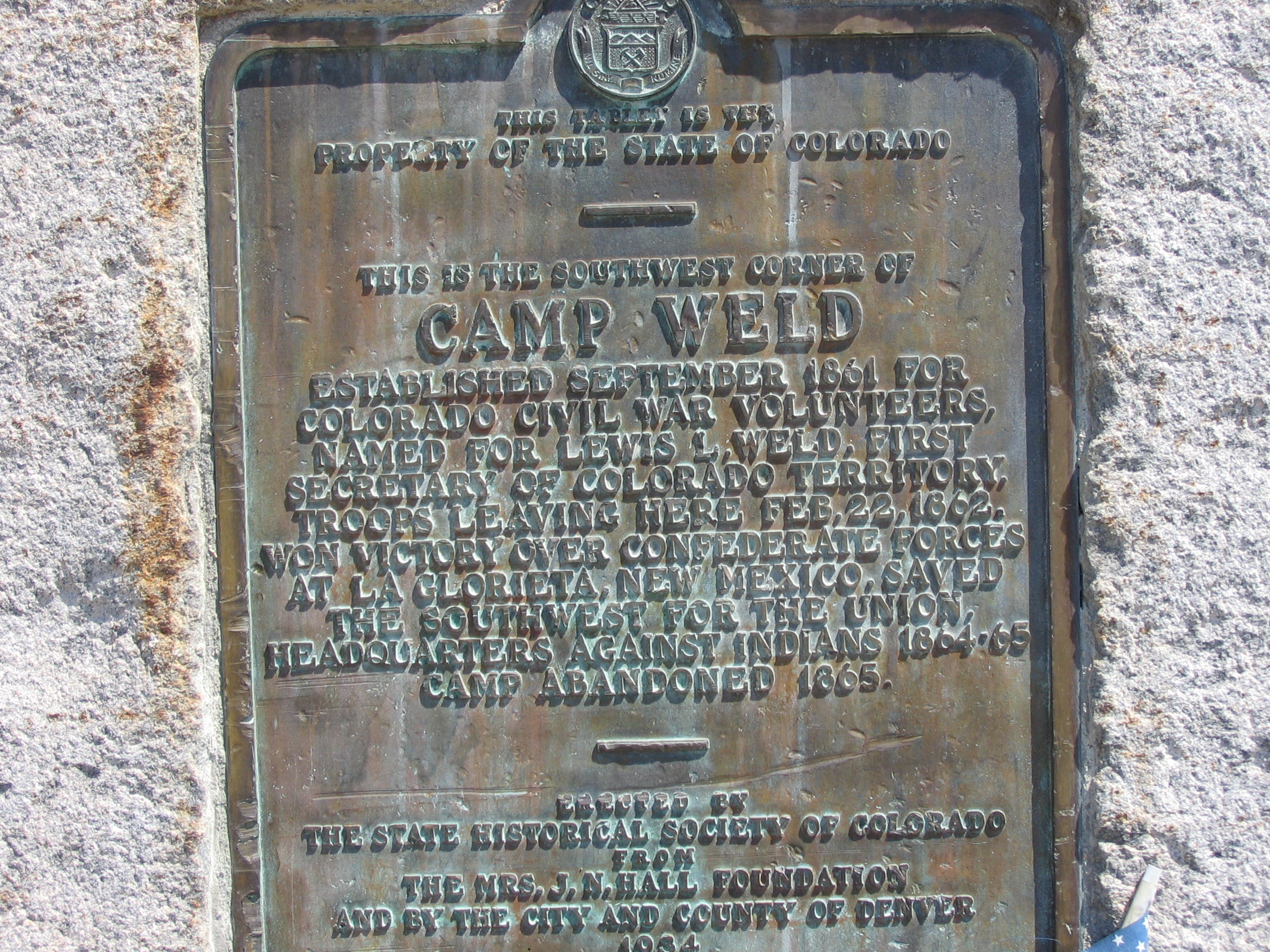
    Camp Weld Sign in Denver
  • President Obama/U. S. Congress Sear 1885 Major Crimes Act

    The following is an example of how far behind
    America is with respect to the native people of
    America. No human being should be treated
    like Native Americans have been and are
    treated. America’s founders based the
    United States Constitution on equality.

    We must, as a people, show our respect
    to native people. They eat as we eat. They
    breath as we breath. They die as we die.
    No human being transcends this. Give me
    one reason why anyone is better than anyone
    else and I will ask you, what do you mean
    by better?

    President Barack Obama signed legislation into law
    on July 29, 2010 written to help America’s indigenous
    women. The Tribal Law and Order Act passed
    despite House Republicans efforts to kill the bill.
    More than 90 House Republicans voted against
    the bill, despite strong bipartisan support in the
    Senate.

    “When 1 in 3 Native American women will be raped
    in their lifetimes, that is an assault on our national
    conscience; it is an an affront to our shared humanity;
    it is something we cannot allow to continue,” Obama
    said.

    A Lakota Sioux woman, Lisa Marie Iyotte,
    and a rape victim which occurred in front of her 2
    daughters, and whose case was never prosecuted
    by overworked federal officials because the
    perpetrator didn’t use a weapon, said, “If the Tribal
    and Order Law had existed 16 years ago, my story
    would be very different.” Ms. Iyotte stood at the
    podium for several minutes, struggling through
    tears to speak, before Obama appeared at her side.

    The 1885 Major Crimes Act states that American
    Indians cannot prosecute felony crime that occurs
    on their reservations, which is the U. S. attorneys’
    responsibility, and is based in cities hundreds of
    miles away.

    “Unquestionably, the issue of violence and crime
    against Indians warrants the attention of Congress,
    and it deserves better than to be considered under
    the process that is most commonly used to name post
    offices,” said Nathaniel Sillin, Colorado Rep. Mike
    Coffman’s (R) spokesman.
    ###

    Donald L. Vasicek
    Olympus Films+, LLC

    The Zen of Writing


    dvasicek@earthlink.net
    303-903-2103

  • In Memorium Sand Creek Massacre Descendant

    William Lee ‘Sage Man’ Pedro, In Memoriam, by Donald L. Vasicek

    2006-03-26 | William Lee “Sage Man” Pedro
    Sand Creek Massacre Descendant
    Southern Arapaho

    I was informed today that William Lee “Sage Man” Pedro, a Sand Creek Massacre descendent, a descendant of John Smith, and a Southern Arapaho man, who has been proactive with respect to the re-burial of remains taken from the Sand Creek Massacre, died of a brain injury from a fall while shopping with his wife.

    Lee, as I was honored to be able to respectfully call him, was a passionate man, whose eyes would tear and sear me when he talked about the atrocities at Sand Creek with me. Although he took me to task for being a white man who could not be trusted simply because I was a white man, and who met me nose-to-nose on several occasions to make sure I was on the straight and narrow with his people and him, he did support my efforts to tell the Cheyenne and Arapaho people’s stories via their oral histories in the educational video and documentary film. He will be missed. I gave one moment today for Lee. I looked up into the sun. My eyes drifted to green grass blades pushing their way into new life on the ground. I saw a majestic maple tree reaching for the blue sky. Then, the greening buds on its branches. A dog barked. It echoed against the silence of this moment, and I knew Lee is now with his ancestors.

    I am hopeful that each of you can honor him for one minute out of your busy lives. He was an aboriginal, a native, a man who was part of the roots of America, and its rich, American history. He agonized over the way his people have been treated for nearly four centuries by the United States government and other Americans. Lee’s heart wrenched with sadness, with anger, and with pride over this.

    Honor him as he has honored us.

    Peace and Love,
    Donald L. Vasicek
    Olympus Films+, LLC
    http://www.donvasicek.com
    dvasicek@earthlink.net