“Sand Creek Massacre: Denver Post Article ‘slap in the face'”

Friday, July 12, 2013
Sand Creek Massacre: Denver Post article ‘slap in the face’
By Brenda Norrell

Censored News

The filmmaker of The Sand Creek Massacre said an article in the Denver Post is a “slap in the face” to the victims of the Sand Creek Massacre in southeastern Colorado.

“The Sand Creek Massacre was the ugliest form of human depravity in American history, even transcending Columbine, Virginia Tech, Newtown, Boston, Fort Hood and so on. Rape, mutilations, executions, murder and burning bodies of children, special needs people, elders, and women top the list of depravities,” Donald L. Vasicek told Censored News.

Vasicek told the author of the article at Denver Post, Eric Gorski, that Indigenous Peoples continue to be treated with disrespect by the media.

“The only thing they ever wanted, as most of America’s indigenous people, have always desired, simply respect and America’s media and press continue to wipe their feet on them.”

In response to the article in Denver Post, Vasicek wrote the following response.

Denver Post article: Sand Creek Massacre Descendants sue Federal Government for Reparations http://www.denverpost.com/breakingnews/ci_23642176/sand-creek-massacre-descendants-sue-federal-government-reparations

Dear Mr. Gorski,

Although your article about the Sand Creek Massacre Descendants’ Trust law suit for reparations regarding the Sand Creek Massacre is informative, I have to say that I was surprised to see that there were inaccuracies in it.

I wrote, directed and produced “The Sand Creek Massacre”, a documentary film that featured Cheyenne and Arapaho descendants of the Sand Creek Massacre sharing their family oral histories with me. Two Cheyenne and direct Sand Creek Massacre descendants, Southern Cheyenne Chief Laird (Whistling Eagle) Cometsevah and his wife, Colleen, an historian and genealogist, told me that over 400 Cheyenne were murdered at Sand Creek. They based this figure on what has been known in their families for 150 years. They also told me that the Arapaho always traveled and camped about 8 miles behind the Cheyenne, so the Arapaho were not at Sand Creek.

Many laugh at this and say the Cometsevah’s did not know what they were saying. Both of them passed on before they could finish their work. They played an integral role in guiding and directing me while making my film. The film won 3 best film film festival awards and was cataloged into the Smithsonian Institute Libraries, amongst other things. Films Media Group has been distributing it in North America and Asia.

Media and journalists have been using these inaccuracies for years. It shows no respect for Laird and Colleen. It’s like slapping them in the face. The only thing they ever wanted, as most of America’s
indigenous people, have always desired, simply respect and America’s media and press continue to wipe their feet on them. Until that respect is genuinely exhibited by the media and press, America’s indigenous people will continue to be looked upon as second class citizens by most others.

Best Regards,

Donald L. Vasicek
http://www.donvasicek.com
dvasicek@earthlink.net
303-903-2103

Click on Photo to See Entire Photo
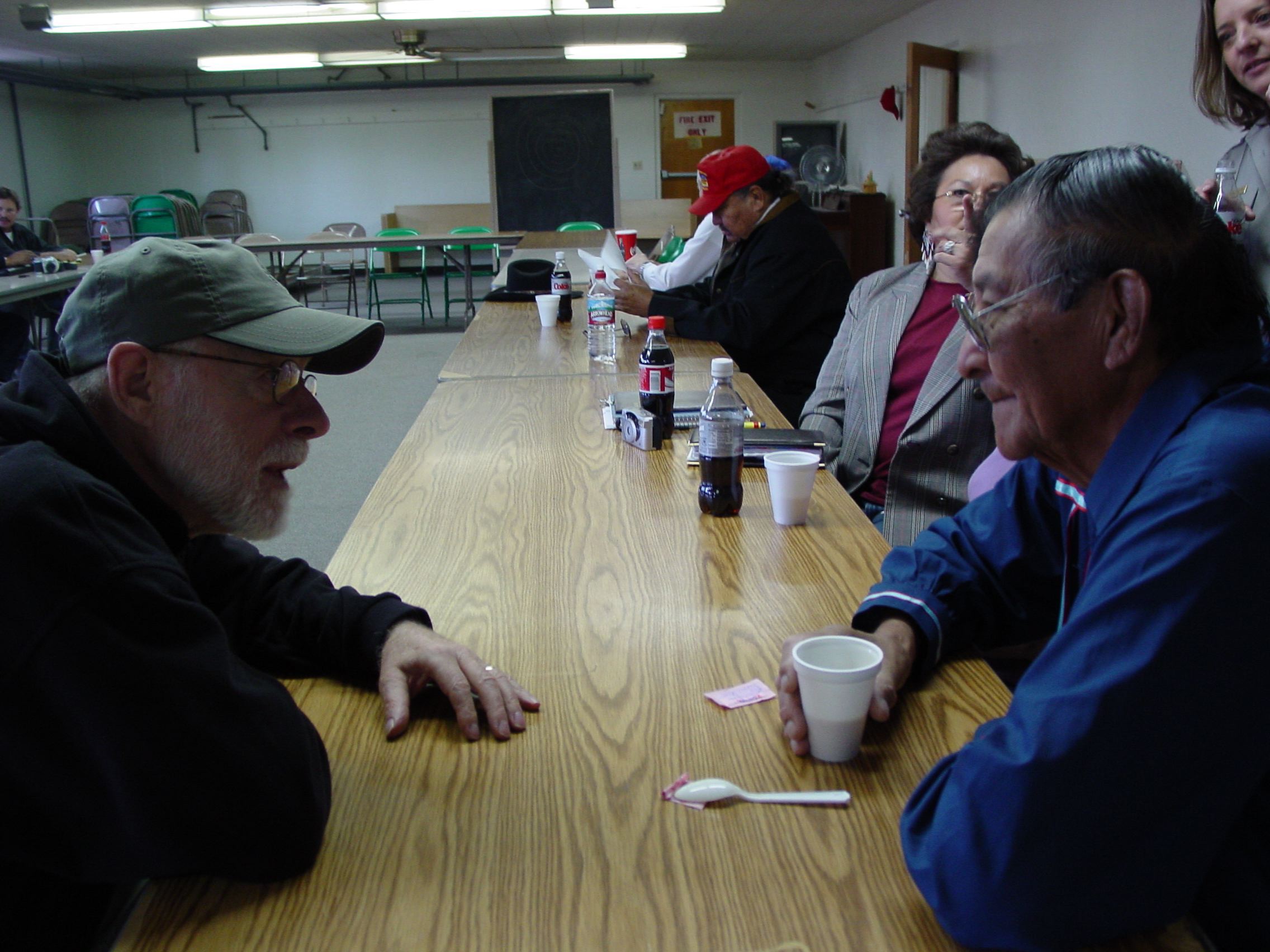
Donald L. Vasicek-Writer/Filmmaker - Cheyenne Chief Laird Cometsevah
Donald L. Vasicek-Writer/Filmmaker – Cheyenne Chief Laird Cometsevah

Sand Creek Massacre Article Slaps Cheyennes in Face


Dear Mr. Gorski,

Although your article about the Sand Creek Massacre Descendants’ Trust
law suit for reparations regarding the Sand Creek Massacre is informative,
I have to say that I was surprised to see that there were inaccuracies in it.

I wrote, directed and produced “The Sand Creek Massacre”, a documentary
film that featured Cheyenne and Arapaho descendants of the Sand Creek
Massacre sharing their family oral histories with me. Two Cheyenne and
direct Sand Creek Massacre descendants, Southern Cheyenne Chief
Laird (Whistling Eagle) Cometsevah and his wife, Colleen, an historian
and genealogist, told me that over 400 Cheyenne were murdered at
Sand Creek. They based this figure on what has been known in their
families for 150 years. They also told me that the Arapaho always
traveled and camped about 8 miles behind the Cheyenne, so the
Arapaho were not at Sand Creek.

Many laugh at this and say the Cometsevah’s did not know
what they were saying. Both of them passed on before they could
finish their work. They played an integral role in guiding and directing
me while making my film. The film won 3 best film film festival awards
and was cataloged into the Smithsonian Institute Libraries, amongst
other things. Films Media Group has been distributing it in North
America and Asia.

Media and journalists have been using these inaccuracies for years. It
shows no respect for Laird and Colleen. It’s like slapping them in
the face. The only thing they ever wanted, as most of America’s
indigenous people, have always desired, respect and America’s media and press
continues to wipe their feet on them. Until that respect is exhibited
by the media and press, America’s indigenous people will continue
to be looked upon as second class citizens by most others.

Best Regards,

Donald L. Vasicek
Olympus Films+, LLC
The Zen of Writing & Screenwriting
http://www.donvasicek.com
dvasicek@earthlink.net
303-903-2103

Sand Creek Massacre Testimony About the Dead

John Smith testifying before a government committee on March 14, 1865:

“On the day of the attack. He asked me many questions about the chiefs who were there, and if I could recognize them if I saw them. I told him it was possible I might recollect the principal chiefs. They were terribly mutilated, lying there in the water and sand; most of them in the bed of the creek, dead and dying, making many struggles. They were so badly mutilated and covered with sand and water that it was very hard for me to tell one from another. However, I recognized some of them – among them the chief One Eye, who was employed by our government at $125 a month and rations to remain in the village as a spy. There was another called War Bonnet, who was here two years ago with me. There was another by the name of Standing-in-the-Water, and I supposed Black Kettle was among them, but it was not Black Kettle. There was one there of his size and dimensions in every way, but so tremendously mutilated that I was mistaken in him. I went out with Lieutenant Colonel Bowen, to see how many I could recognize.”
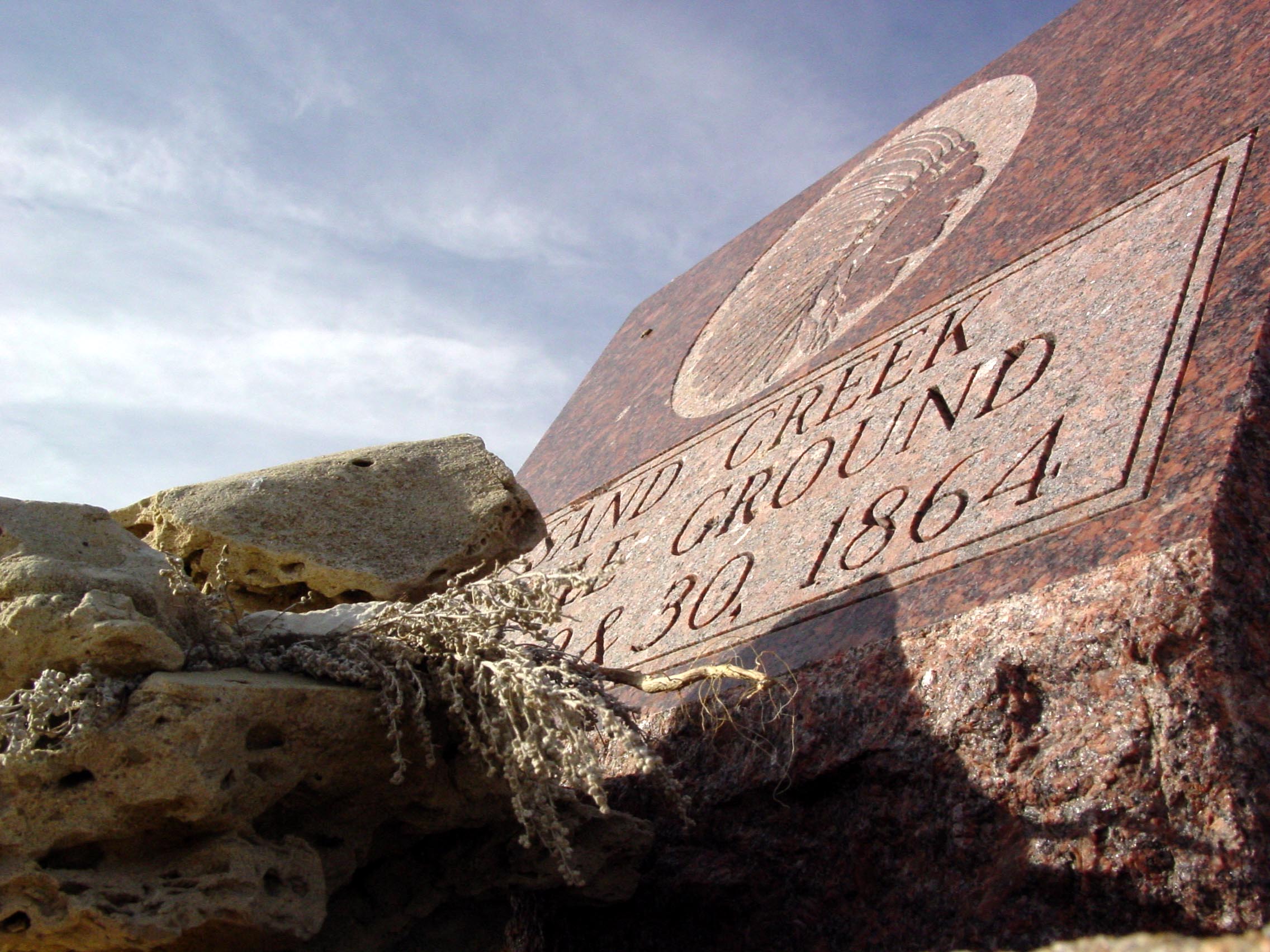
sand-creek-massacre-site-marker
Photo by Navajo Filmmaker Shonie de la Rosa. – Click on Photo to see all of it.