John Smith testifying before a government committee on March 14, 1865:
“On the day of the attack. He asked me many questions about the chiefs who were there, and if I could recognize them if I saw them. I told him it was possible I might recollect the principal chiefs. They were terribly mutilated, lying there in the water and sand; most of them in the bed of the creek, dead and dying, making many struggles. They were so badly mutilated and covered with sand and water that it was very hard for me to tell one from another. However, I recognized some of them – among them the chief One Eye, who was employed by our government at $125 a month and rations to remain in the village as a spy. There was another called War Bonnet, who was here two years ago with me. There was another by the name of Standing-in-the-Water, and I supposed Black Kettle was among them, but it was not Black Kettle. There was one there of his size and dimensions in every way, but so tremendously mutilated that I was mistaken in him. I went out with Lieutenant Colonel Bowen, to see how many I could recognize.”
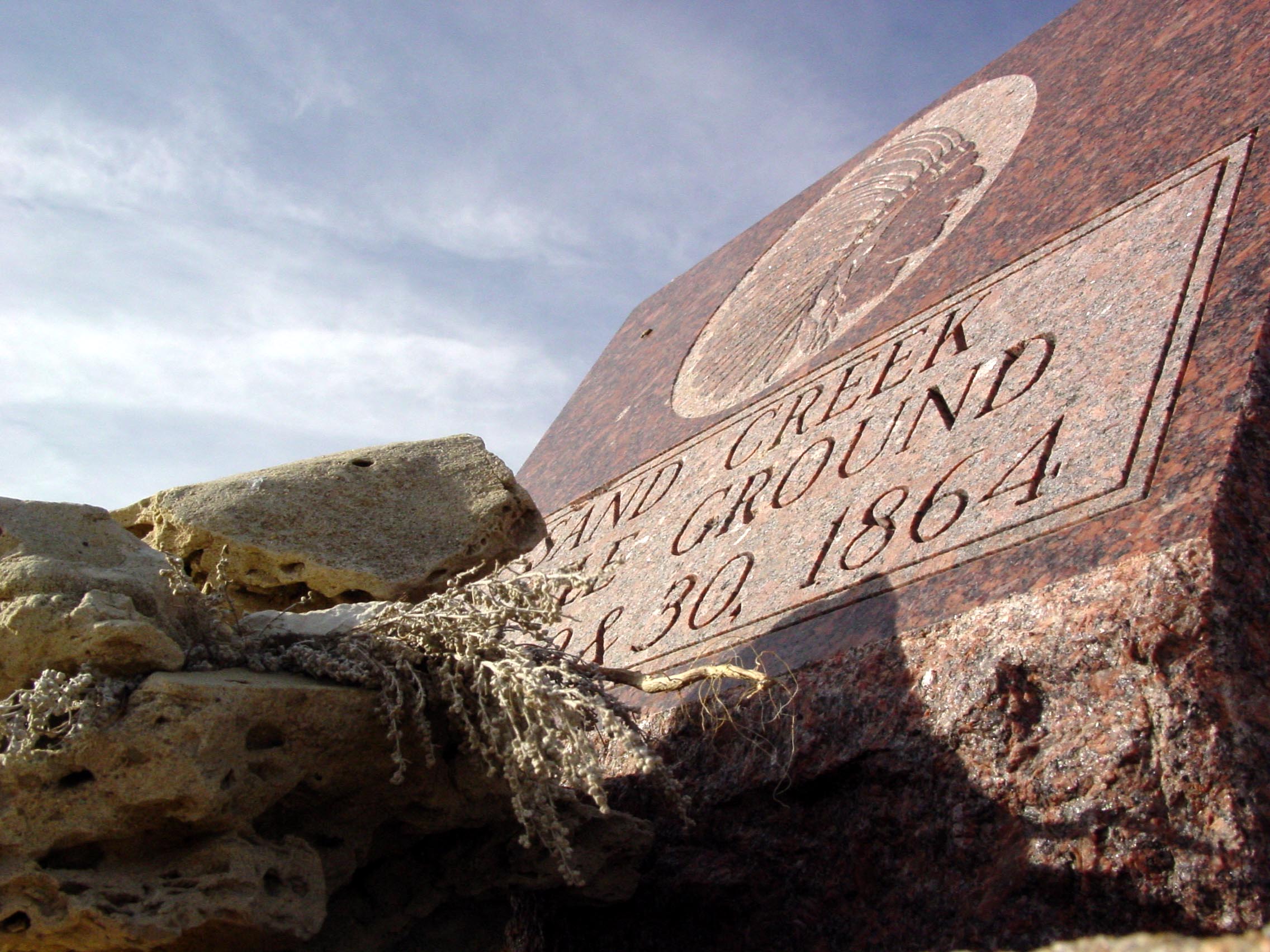
Photo by Navajo Filmmaker Shonie de la Rosa. – Click on Photo to see all of it.