(May 27, 2012 response to “Boulder Daily Camera” article):

During the past several years while reading about the Sand Creek Massacre as written by various writers, journalists, etc., one thing in common continues to surface. No one interviews the Cheyenne people before they write what they write. That is not ojbective journalism. You all need to do that if you want to write the complete truth about this horrific and tragic event in American history.

The research I did while making my award-winning documentary film about the Sand Creek Massacre, which was recently put in the Smithsonian Institute Libraries, I learned from Southern Cheyenne Chief Laird (Whistling Eagle) Cometsevah that there were over 400 Cheyenne children, women, elders and physically- and mentally-challenged people murdered, raped, mutilated and burned during and after that massacre.

Also, Chief Cometsevah told me that the Arapaho were not at Sand Creek. The Arapaho always followed the Cheyenne wherever they went. The Arapaho always camped about eight miles away from the Cheyenne, it was an unwritten law between the tribes. The early morning of the Sand Creek Massacre, the Arapaho were camped by Sand Creek eight miles to the south of Dawson Bend, where, as Chief Cometsevah told me, the massacre took place.

Chief Cometsevah, as well as several other Cheyenne and Arapaho people told me, the only thing they want now is respect. Check it out. Over 147 years have passed since the Sand Creek Massacre, and that respect is still as fleeting as a peregrine falcon racing away through the sky. Respect begins with the self. Respect can be demonstrated by including the Cheyenne people in all media reporting, and it should begin now!

So, you all should think about these pieces of research the next you write about the Sand Creek Massacre.
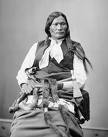
Chief Niwot Speaks To Donald L. Vasicek

Chief Niwot

Note: I am sharing the following with each of you.
The reason why I am sharing this with each of you
is because it is In “Conversations with God”.
Author Neal Donald Walsch, said on Larry King,
that “God can be anything.”

The following came unexpectedly to me one day. It was from Harry Strunk:

“I’m on a personal journey in my writing and am channeling Chief Niwot to bring Native American wisdom to our problems of today. It will be similar to “Conversations with God” (by Neal Donald Walsch) in a question/answer format entitled ”The Left Hand Journey to Wisdom: A walk with Chief Niwot.” (Niwot means left hand in Arapaho). Whether this materializes in a physical walk from Sand Creek to Gold Lake or merely a metaphysical walk – or combination of the two – has yet to be determined.

The Sand Creek massacre seems to be playing an important role in this project since it represents loss and separation…we all have our own personal Sand Creeks. It also represents the healing that we all face and the change in life we can’t control.

Here is a message from Chief Niwot…”

“Donald Vasicek,
Your walk is never more important as now. The blending of the four colors is just beginning – Obama is testament to that. This is why your project is not only timely, but of great importance to the collective healing that must take place.

Remember in your message…being stuck in victimization and hanging on to the wound is detrimental to this healing. Through the lessons of time, the teaching part is to let go of the past and embrace forgiveness, while still using that past as a history lesson.

The Great Spirit of the Southern Arapaho is the same for every man. It is telling us all and using these tragedies as a way to touch our hearts. The sadness must overcome the anger to stir the deep love we have for each other. Fear and hatred has no place in this process.

Move ahead with your project as the funds will come from the love and hearts of many.

Blessings and good medicine on your journey.”
Chief Niwot

Respect

I worked with Cheyenne and Arapaho people on a documentary film. It was their story, and they told it, on film. One thing surfaced more than any other during the several years it took to get the job done. Respect. Respect has never really been shown to the Cheyenne and Arapaho people. If respect is shown, and it is meant, then, it will be most helpful to the Cheyenne and Arapaho people.

When writing about the Sand Creek Massacre, one should always interview Cheyenne and Arapaho people. They tell quite a story (check my award-winning documentary, “The Sand Creek Massacre”, and you will understand what I mean). If one doesn’t interview Cheyenne and Arapaho people, then they are showing disrespect to the Cheyenne and Arapaho.

Southern Cheyenne Chief Laird (Whistling Eagle)Cometsevah told me that over 400 Cheyenne people were murdered at Sand Creek. He also told me that the Arapaho people always traveled and camped about 8 miles away from the Cheyenne. He said the Arapaho were not at Sand Creek. He bases these statements on what has been passed down through his family. His great-great grandfather survived the Sand Creek Massacre.

The Cheyenne oral histories must also be respected, particularly since whoever presently writes about the Sand Creek Massacre, were not there on November 29, 1864. Cheyenne people’s ancestors were there. Cheyenne people’s ancestors passed their oral histories down through their families. So, these oral histories must be respected. They contain more facts about the Sand Creek Massacre than most Caucasians can find, many more facts.

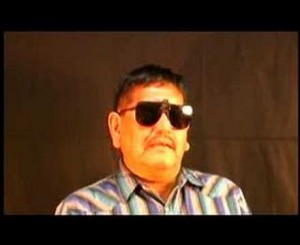
Southern Cheyenne Joe Big Medicine